
By Salman Lali
..
In the long, bitter history of the Middle East, peace plans have rarely delivered peace. Ceasefires come and go. Boards, summits, and accords are announced with great fanfare, only to quietly collapse under the weight of power politics. Gaza, scarred by repeated wars and decades of occupation, sits at the centre of this tragedy.
It is in this fragile and dangerous setting that Pakistan has accepted US President Donald Trump’s invitation to join the so-called “Board of Peace” (BoP) on Gaza, alongside seven other Muslim-majority countries. On paper, the idea sounds noble: consolidate a ceasefire, rebuild Gaza, and create a pathway towards stability. In reality, history urges caution.
Pakistan’s decision may raise its diplomatic profile, but it also carries serious risks—political, strategic, and moral. Without addressing the root causes of the conflict—Israeli occupation, settlement expansion, and denial of Palestinian self-determination—the Board of Peace risks becoming yet another mechanism to manage the conflict, not resolve it.
We have seen this movie before. The Oslo Accords, the Camp David talks, and later the Quartet Roadmap all promised hope. All failed. Pakistan must ask a hard question: is this initiative a genuine peace effort, or a carefully designed trap?
The Ceasefire That Gave Birth to the Board
The Board of Peace emerged from the Gaza ceasefire formalised under Trump’s “Comprehensive Plan to End the Gaza Conflict” in September 2025. The plan, a 20-point framework, was later endorsed by the UN Security Council through Resolution 2803 in November 2025.
This marked a pause in the devastating war that followed the October 7, 2023 attacks, a conflict that killed tens of thousands and flattened much of Gaza’s infrastructure.
Phase One of the ceasefire began on October 10, 2025. It focused on stopping hostilities, exchanging hostages and prisoners, and allowing humanitarian aid into Gaza. Qatar, Egypt, and Turkey mediated the process. While a fragile calm emerged, it was far from clean. Reports indicate Israel violated the ceasefire more than 1,300 times through airstrikes and ground actions—highlighting the difficulty of enforcing restraint in an unequal conflict.
By January 2026, Phase Two was announced. This phase shifted focus to demilitarisation, transitional governance, and reconstruction. The political logic was clear: Washington used its leverage—military aid to Israel and economic incentives to Arab states—to push the plan forward. Critics, however, noted that core issues such as Palestinian refugees’ right of return and Jerusalem’s status were once again sidelined, echoing the Abraham Accords’ approach of normalisation without justice.
Oslo: A Lesson Pakistan Cannot Ignore
Any serious analysis of Gaza must revisit the Oslo Accords—not as history, but as warning.
Signed in 1993 and 1995, Oslo was meant to lead to Palestinian self-rule and a final settlement. Instead, it collapsed under its own contradictions. Israeli withdrawals were partial. Settlement expansion accelerated, rising from about 115,700 settlers in 1993 to over 200,000 by 2000. Palestinian land became fragmented, making real governance impossible.
Violence spiralled into the Second Intifada between 2000 and 2005. Thousands died. Final-status issues—borders, Jerusalem, refugees—were deliberately postponed, allowing Israel to change facts on the ground. Palestinian intellectual Edward Said famously called Oslo a “Palestinian Versailles,” arguing it legalised occupation without sovereignty.
On the Israeli side, internal divisions peaked with Prime Minister Yitzhak Rabin’s assassination in 1995. Right-wing governments under Benjamin Netanyahu slowed withdrawals and hardened security policies.
In international relations terms, Oslo became a textbook case of the “security dilemma.” One side’s actions, framed as defensive, created insecurity for the other, leading to escalation. External mediators, especially the US, were never neutral. Power imbalance shaped outcomes.
If the Board of Peace follows the same script—disarm Palestinians first, promise political rewards later—it is likely to fail in the same way.
What Exactly Is the Board of Peace?
The Board of Peace is neither a UN body nor a traditional coalition. It is a hybrid structure.
Chaired by Donald Trump, it includes invited heads of state, an executive board of diplomats and businessmen—names like Jared Kushner and Tony Blair—and a Gaza-focused technocratic committee led by Palestinian figures such as Ali Shaath.
Its mandate is broad:
- Oversee an International Stabilisation Force (ISF)
- Supervise Gaza’s demilitarisation
- Manage reconstruction estimated between $50–100 billion
- Establish transitional governance under UN oversight
The model resembles past interventions such as NATO’s Kosovo Force or the Sinai’s Multinational Force and Observers. The demilitarisation clause targets “unauthorised personnel,” effectively Hamas and other resistance groups. History shows such disarmament—like post-2003 Iraq—often fuels insurgency rather than peace.
Reconstruction funding will largely come from the Gulf and the US. Governance is supposed to be handled by “deradicalised” Palestinian technocrats, with eventual statehood promised under strict Israeli security conditions.
A controversial feature is permanent membership tied to a $1 billion contribution—effectively turning peace into a pay-to-play arrangement. This tilts influence towards wealthy states like Saudi Arabia and sidelines poorer ones, creating an imbalance in decision-making.
Why Pakistan Said Yes
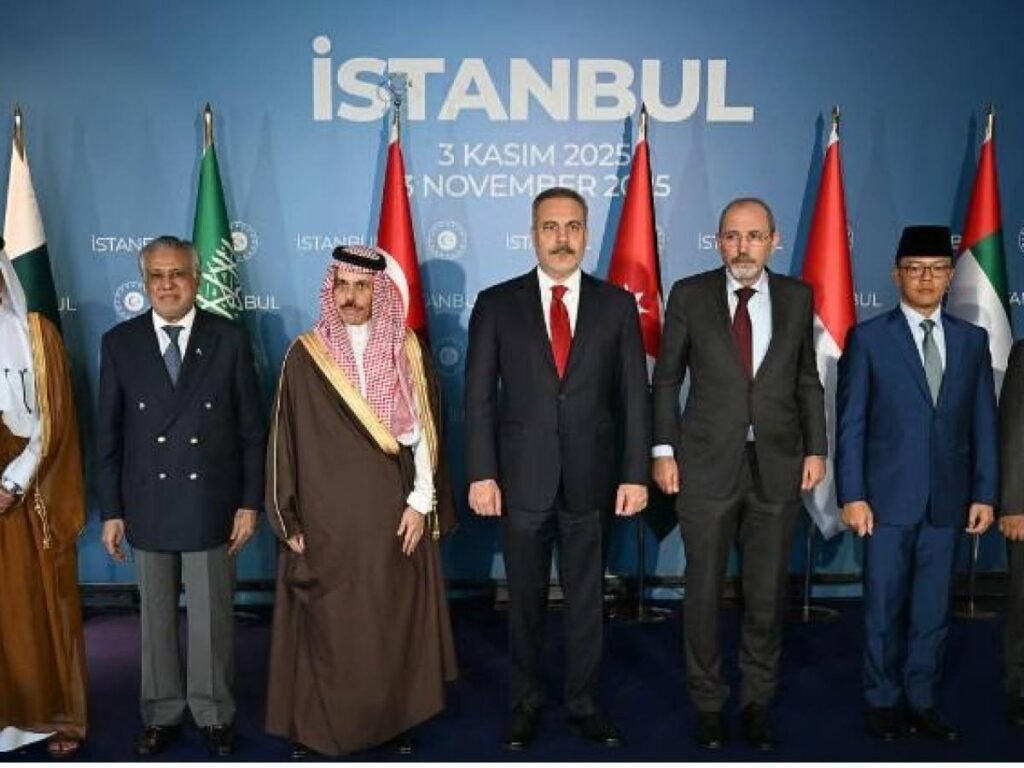
Pakistan formally accepted the invitation on January 21, 2026. It joined Saudi Arabia, Turkey, Egypt, Jordan, Indonesia, Qatar, and the UAE in a joint declaration.
The logic is understandable. Islamabad likely felt it was better to be inside the room than outside it. Participation may offer diplomatic leverage, economic relief, and renewed relevance in Washington.
Yet the concerns are real.
Domestically, Pakistan’s public views Hamas not as a terrorist group, but as a resistance movement—often compared to Kashmir’s struggle. Any role in disarming Hamas risks backlash similar to what Pakistan faced during the War on Terror, when cooperation with the US triggered militant blowback and strengthened the TTP.
Strategically, Pakistan’s forces are already stretched. The Afghan border remains volatile, with TTP sanctuaries across the Durand Line. Relations with India remain tense along the Line of Control. Overcommitment abroad invites danger at home.
In alliance theory, this is called “entrapment”—being dragged into conflicts that serve others’ interests more than your own.
Israel’s Problem with Pakistan
Israel has made its discomfort clear. Prime Minister Netanyahu has blocked troops from countries he considers “Hamas-friendly,” including Turkey and Qatar.
Pakistan, which does not recognise Israel and possesses nuclear weapons, is seen in Tel Aviv as unpredictable. Israeli planners fear Pakistani involvement could embolden Palestinian factions or complicate demilitarisation.
Israel prefers contributors aligned through the Abraham Accords, such as the UAE and Bahrain. This creates a classic coalition problem: partners with conflicting agendas under one command structure.
Pakistan’s army, trained primarily in counterinsurgency, may hesitate in Gaza’s dense urban warfare. This could lead to mission creep or political friction—problems seen in UNIFIL in Lebanon and other peacekeeping missions.
Lessons from the 1991 Gulf War
Pakistan has been here before.
During the 1991 Gulf War, Pakistan sent over 5,500 troops to Saudi Arabia in defensive roles, protecting holy sites and borders. This followed earlier deployments between 1982 and 1987. After the war, Pakistani forces helped clear mines in Kuwait.
There were benefits: strong Gulf ties, remittances from over a million expatriates, and US support.
But there were costs. Many in the Muslim world saw the coalition as Western imperialism. At home, anti-US sentiment deepened. Strategically, Pakistan’s alignment strained relations with Iran.
These lessons shaped Pakistan’s later refusal to join the Yemen war. The message was clear: avoid foreign quagmires when your own borders are burning.
A Region Already on Edge
Pakistan today faces hybrid threats on multiple fronts. TTP attacks continue. India watches closely for signs of weakness, as seen in 2019’s Balakot crisis. Any distraction could invite adventurism.
Within the Muslim world, reactions are mixed. Gulf states support the BoP. Iran calls it a “Zionist trap.” Public opinion in Turkey, Indonesia, and Pakistan is largely hostile.
What History Suggests
Other peace experiments offer warnings.
The Dayton Accords ended the Bosnian war but froze ethnic divisions. UNIFIL in Lebanon shows how peacekeepers fail without enforcement power. Disarming Hamas without trust resembles attempts to disarm the IRA before political settlement—unlikely to succeed.
Even optimists give the BoP only a 20–30% chance of success, dependent on Hamas inclusion, Israeli withdrawal timelines, and genuine neutrality.
Final Word
The Board of Peace gives Pakistan a seat at the table—but also places it near the fire.
History, from Oslo to the Gulf War, teaches that ceasefires without justice do not last. As Lt Gen (Ret) Rizwan Akhtar rightly argued in The Nation on January 22, 2026, Pakistan must stick to UN principles, reject recognition of Israel, and uphold Al-Quds as Palestine’s capital.
This is not paranoia. It is much needed prudence.
In international politics, especially in the Middle East, vigilance is survival. Pakistan must engage like a careful forward observer—watching every move before stepping ahead.
Peace in Gaza will not come from boards and press releases. It will come from justice. If Pakistan’s participation amplifies that truth, it will be remembered well. If not, history will be unforgiving.