
By Salman Lali.
The global economic system that emerged after the Second World War is no longer holding together. What was once a rules-based order anchored in predictable finance, stable currencies and Western stewardship is giving way to a fragmented, uncertain landscape shaped by geopolitical rivalry, sanctions, debt and strategic mistrust.
This is not a sudden collapse. It is a slow retreat — but one that has accelerated sharply over the past five years.
The foundations of the post-war order were laid at Bretton Woods in 1944, when the US dollar was positioned as the world’s reserve currency, backed by gold and supported by new institutions such as the International Monetary Fund and the World Bank. The arrangement brought stability and growth, particularly for Europe and Japan, but it also embedded a structural imbalance. The United States alone could finance deficits in its own currency. Others could not.
That imbalance became more pronounced after 1971, when the US abandoned the gold standard altogether. Fiat money replaced discipline with trust — trust in American economic management, political restraint and institutional continuity. For decades, that trust endured.
It is now eroding.
The weaponisation of finance, particularly through sanctions, has played a decisive role. The freezing of sovereign reserves, the exclusion of states from payment systems, and the increasing use of trade and tariffs as political tools have altered how countries perceive risk. The message many capitals have drawn is straightforward: dependence is vulnerability.
The war in Ukraine crystallised this shift. While Western sanctions imposed costs on Russia, they did not produce economic collapse. Instead, they accelerated adaptation. Trade was rerouted, reserves diversified, and alternatives — once dismissed as impractical — proved workable. More importantly, much of the Global South chose not to align fully with Western policy, not out of ideology but self-interest.
This was a signal moment. The idea of a unified international economic response fractured under pressure.
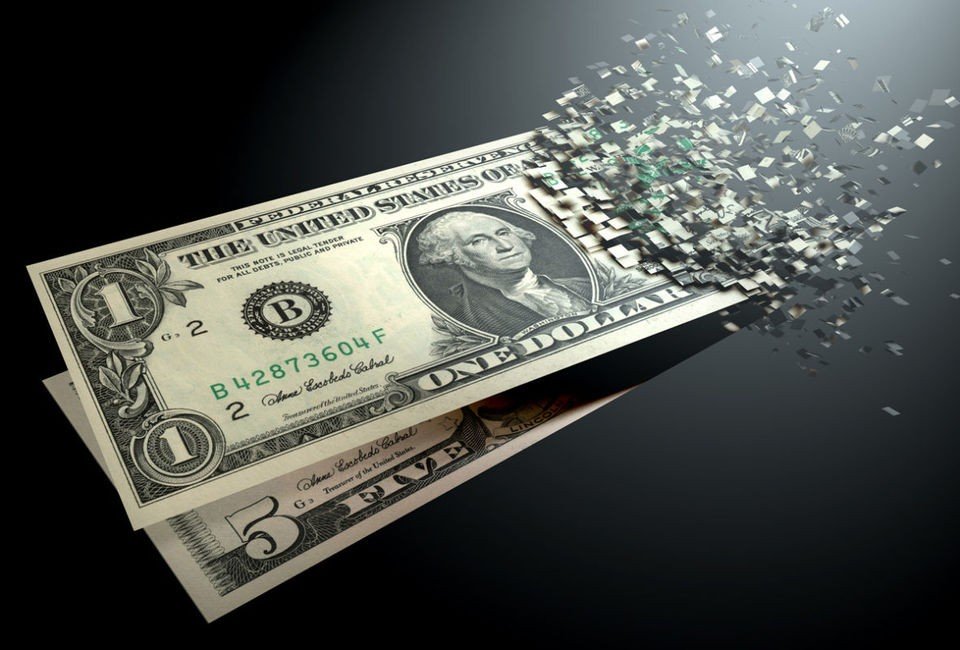
Central banks responded accordingly. Gold purchases surged to record levels. De-dollarisation, though gradual, moved from rhetoric to policy. The dollar remains dominant, but its exclusivity is no longer taken for granted.
Donald Trump’s return to the White House has further unsettled the landscape. Tariffs have re-emerged as instruments of economic coercion. Alliances are treated as transactional. Predictability — long the quiet strength of American power — has diminished. For middle and smaller states, hedging is no longer optional.
For Pakistan, the unravelling of the global economic order presents far more risk than opportunity. Unlike larger emerging economies, Islamabad enters this period without financial buffers, policy autonomy or political stability — the very tools required to navigate systemic transition.
While Pakistan did register modest growth after the Covid-19 lockdowns, that recovery stalled sharply after 2022. Political upheaval, policy paralysis and repeated balance-of-payments crises have since left the economy fragile. GDP growth remains anaemic, inflation persistent, and investor confidence weak. Foreign exchange reserves hover at precarious levels, barely sufficient to cover a few months of imports. The State Bank’s gold holdings are minimal, offering little hedge against currency volatility or external shocks.
This stands in stark contrast to other large developing economies. China, Russia, Turkey, India and Brazil have steadily increased gold reserves, diversified trade settlement mechanisms and reduced exposure to dollar-denominated risk. Pakistan has not. Not because of strategic restraint, but because it lacks the fiscal space to do so.
The danger is structural. As global trade fragments and financial flows become increasingly politicised, countries without buffers face sharper adjustment costs. Pakistan remains heavily dependent on external financing, multilateral lending and remittances routed through dollar-based systems. Any disruption — whether from sanctions regimes, interest rate shocks or geopolitical misalignment — carries outsized consequences.
Compounding this vulnerability is Pakistan’s current foreign policy posture. Islamabad has, by most measures, opted for close alignment with Washington, particularly during President Donald Trump’s second term. This approach appears driven less by strategy than by necessity — the need to manage IMF negotiations, avoid financial isolation and stabilise short-term flows.
However, such alignment carries long-term risks.
The global South is not rushing into new blocs; it is hedging carefully. Countries are expanding trade in local currencies, experimenting with alternative payment systems and deepening South-South economic ties — slowly, deliberately, and without public confrontation. Pakistan, by contrast, risks being seen as reactive rather than adaptive.
More critically, this posture constrains Islamabad’s room for manoeuvre with China. At a moment when Beijing is consolidating its role as a systemic economic power — not merely a regional one — Pakistan can ill afford strategic ambiguity or drift. China remains Pakistan’s largest investor, infrastructure partner and long-term economic stakeholder. Alienating or marginalising that relationship would come at a cost Islamabad is ill-equipped to bear.
Economic vulnerability in Pakistan is inseparable from political instability. Frequent changes in government, contested mandates and institutional tensions have eroded policy continuity. Investors — domestic and foreign — price political risk aggressively. So do lenders.
In a world where capital is becoming more selective and less forgiving, Pakistan’s inability to present a stable policy horizon is itself a structural liability. Global capital is not retreating; it is reallocating. Countries that cannot offer predictability, legal certainty and coherent economic planning are increasingly bypassed.
This matters because Pakistan is not transitioning during an upswing. It is doing so while negotiating debt rollovers, managing inflationary pressures and absorbing the social costs of austerity.
First, Pakistan must treat economic sovereignty as a gradual process, not a dramatic pivot. De-dollarisation is not an event; it is an accumulation of options. Even limited steps — such as expanding local-currency trade with China, Turkey, Iran and Central Asia — would reduce transactional risk and currency exposure over time.
Second, trade policy requires urgent rationalisation. Pakistani exports suffer less from lack of demand than from lack of competitiveness. High energy costs, unpredictable taxation, and input bottlenecks have priced Pakistani goods out of regional markets. Electricity tariffs, in particular, have become a structural tax on exports. Without reform here, market access negotiations are largely symbolic.
Third, Pakistan must rebalance its tax structure away from production and toward consumption and asset classes that remain undertaxed. Export-oriented sectors cannot scale under punitive withholding regimes and inconsistent rebates.
Fourth, industrial policy must move beyond incentives and into execution. Market access is no longer secured solely through tariffs; it depends on standards, logistics, compliance and reliability. Competing in African, Middle Eastern and Southeast Asian markets requires coordinated state-industry alignment, not fragmented promotion.
Finally, Pakistan must stabilise its political environment — not as a normative aspiration, but as an economic necessity. In an era of systemic uncertainty, credibility is currency. Without it, even favourable external shifts will pass by unused.
The global economic order is not collapsing into chaos, but it is shedding assumptions that once protected weaker states. For Pakistan, this transition is unforgiving. There is little margin for ideological alignment, diplomatic signalling or short-term appeasement strategies.
Survival — and eventual stability — will depend on whether Islamabad can move from dependency management to risk management. That requires policy discipline, geopolitical balance and economic reform that acknowledges reality rather than rehearses ambition.