
According to a report by the Wall Street Journal, the conflict between Iran and the United States has entered a new and more complex phase, shifting from direct air operations to what analysts describe as a “crippling stalemate” in the Strait of Hormuz—one of the world’s most critical energy corridors.
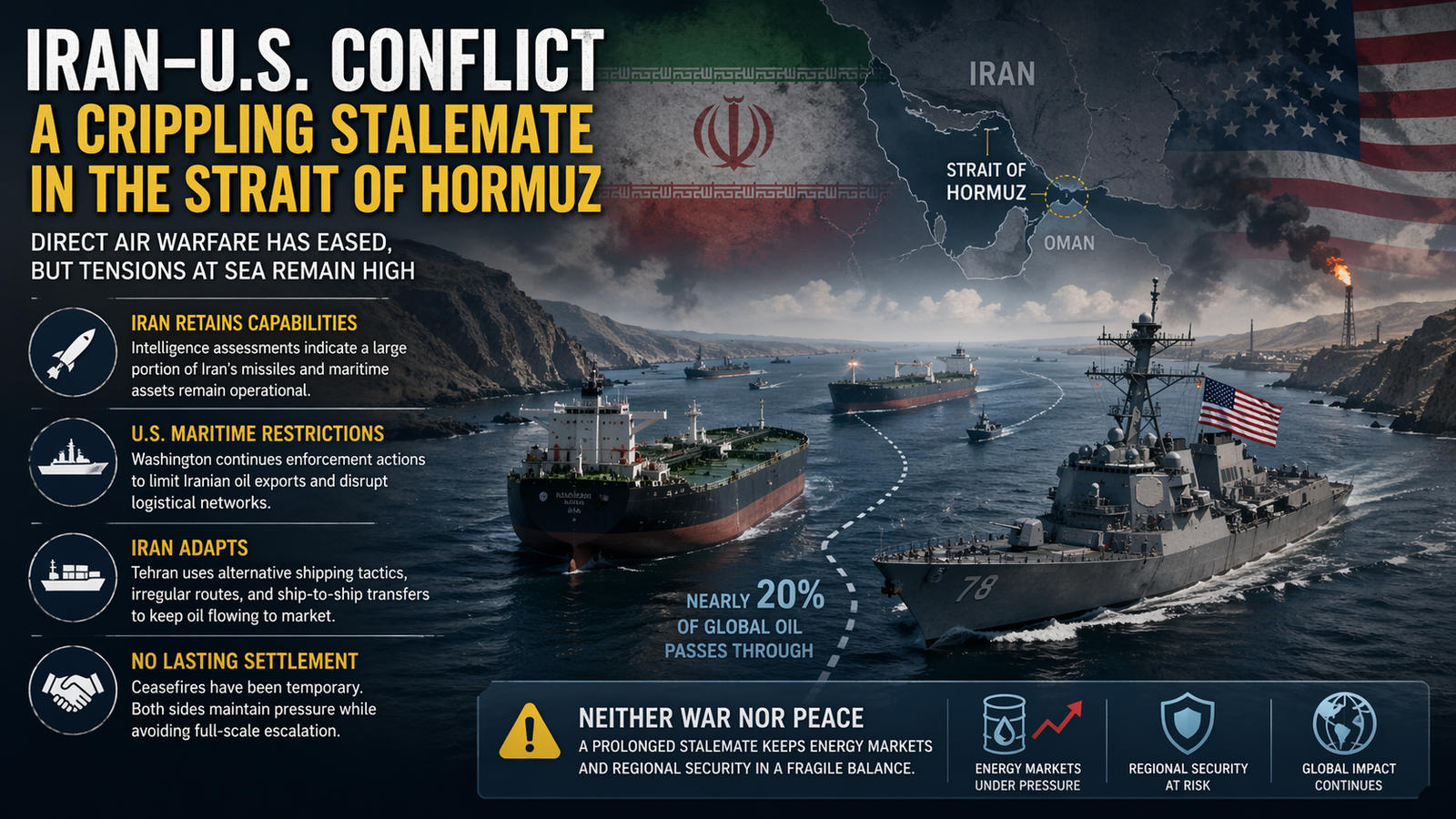
The report highlights that while large-scale aerial exchanges and direct strikes have significantly reduced, tensions at sea remain highly active and unstable. The Strait of Hormuz, through which nearly a fifth of global oil supply passes, has become the central stage of a prolonged strategic confrontation.
U.S. defense officials, as cited in the report, suggest that Iran has retained a significant portion of its military capabilities despite sustained pressure. Intelligence assessments indicate that a large share of Iran’s missile systems and maritime assets remain operational, allowing it to maintain influence over key maritime routes.
In response, the United States has continued enforcing maritime restrictions aimed at limiting Iranian oil exports and disrupting logistical supply chains. These measures include increased naval presence and targeted enforcement actions in regional waters.
However, the Wall Street Journal report notes that Iran has adapted to these pressures through alternative maritime strategies, including irregular shipping patterns and increased use of regional transfer operations, allowing portions of its energy exports to continue reaching international markets.
Despite diplomatic efforts and temporary ceasefire understandings announced in earlier phases of the conflict, a comprehensive political settlement remains elusive. Both sides continue to maintain strategic pressure while avoiding a full-scale military escalation.
As a result, the region now faces a prolonged period of uncertainty, where neither active war nor stable peace has fully taken shape—leaving global energy markets and regional security in a fragile balance.